Your portrait just arrived. It looks incredible. Now you’re holding it up against four different walls trying to decide where it actually belongs.
This is the best problem to have — and also a surprisingly common one. A custom pet portrait isn’t quite like hanging a photo or a generic print. It’s a statement piece with real artistic weight, and where you put it changes everything: how it reads in the room, how often you see it, how much it means.
This guide covers every room in the house, every major home style, and everything you need to know about size, framing, and gallery walls — so your portrait ends up exactly where it was always meant to be.
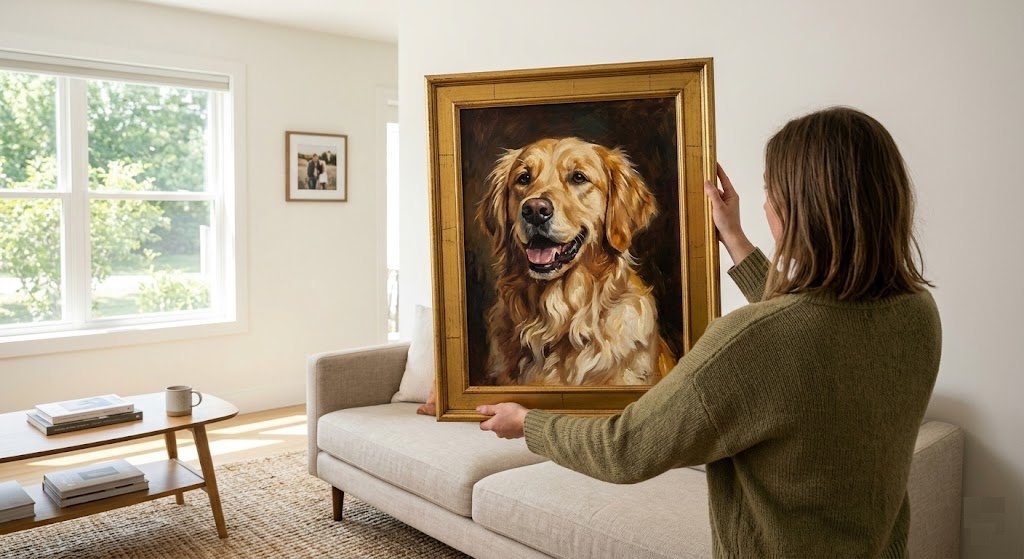
Before You Hang: Two Things to Figure Out First
1. What size did you order?
Size determines placement more than anything else. A large print (20×24″ or bigger) wants a wall with room to breathe — above a sofa, over a fireplace, anchoring a large empty expanse. A medium print (11×14″ or 16×20″) is more flexible and works beautifully as a solo piece or within a gallery wall. A smaller print (8×10″) is most at home in a curated shelf arrangement, a bathroom, or as part of a multi-piece grouping.
If you’re still deciding on size, a good rule of thumb: the print should cover roughly two-thirds the width of the furniture piece beneath it.
2. What’s your framing plan?
FurArtPro prints are frameless by design — which means you get to choose exactly what frames your art, rather than getting something that might clash with your home. Your options:
- Standard frames from IKEA, Target, or a local framing shop (all FurArtPro sizes fit standard dimensions)
- Float mounting for a modern, clean look
- Poster strips or washi tape corners for a casual gallery-wall feel
- Completely unframed, pinned at corners, for a relaxed studio aesthetic
The framing choice will influence which rooms feel right — so it’s worth deciding before you commit to a wall.
Room by Room: Where Your Portrait Will Look Best
The Living Room
The living room is the most natural home for a custom pet portrait — and the most rewarding, because it’s where the piece gets seen most.
Above the sofa is the classic choice. Keep the bottom edge of the frame 6–8 inches above the back of the sofa. For a single large portrait, center it over the couch. For a grouping, let it spread the full width of the seating.
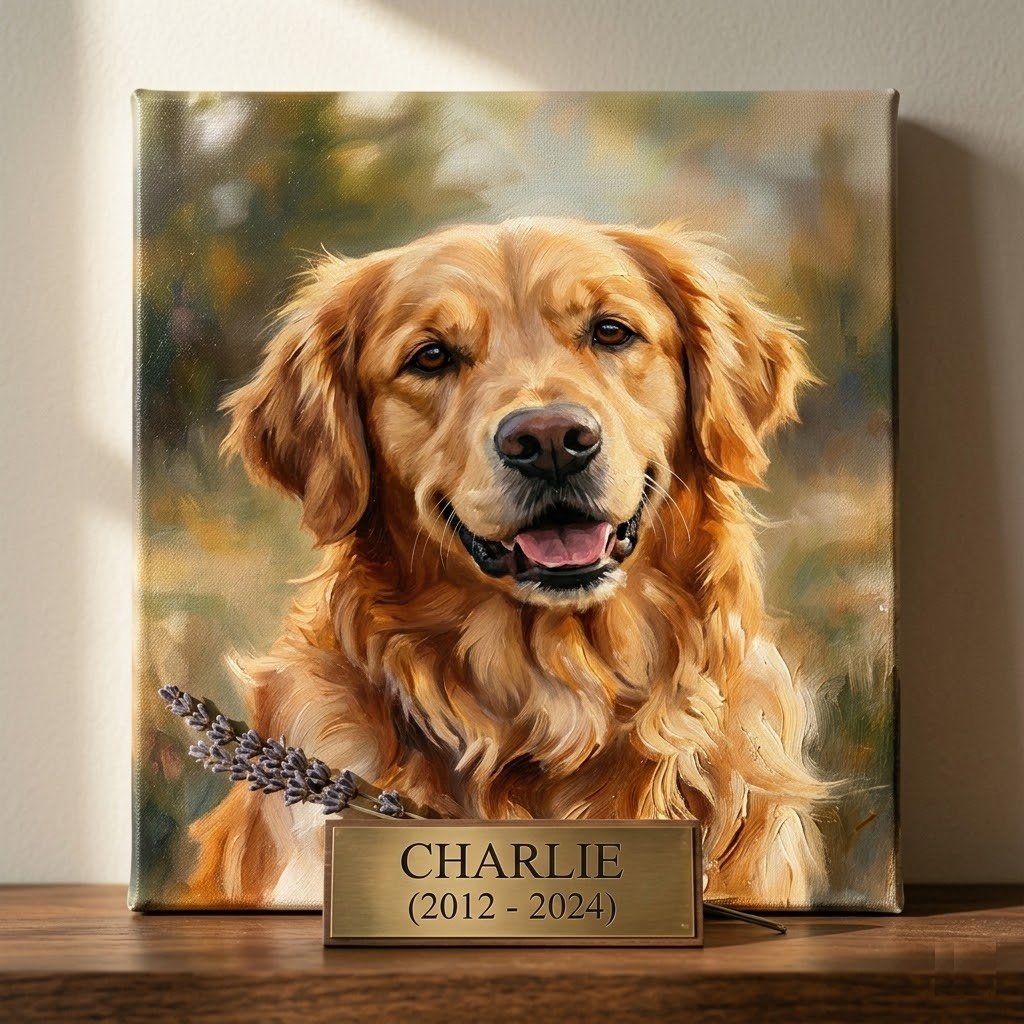
Above the fireplace is the power position. This works best with a larger portrait (16×20″ minimum) and a style that commands attention — oil painting or royal portrait both look extraordinary here. The height and warmth of a fireplace surround creates a natural frame-within-a-frame effect.
On the main feature wall — the wall your eyes land on when you walk into the room — a portrait hung here becomes the room’s anchor. Keep everything else simple so the portrait does the talking.
Size guidance: 20×24″ or larger for above-sofa and feature wall placements. 16×20″ works well in smaller living rooms.
Style pairings that work:
- Traditional living room → Oil painting portrait in an ornate gold frame
- Modern/minimalist → Sketch portrait in thin black metal frame
- Eclectic/maximalist → Royal portrait in a bold antique frame, surrounded by smaller mixed pieces
- Bohemian → Watercolor portrait in a natural wood frame with trailing plants nearby
The Bedroom
The bedroom is where a pet portrait becomes something quieter and more personal. This is the room where you start and end every day, and having your pet on the wall here has a different emotional quality than anywhere else in the house — especially for pet memorial pieces.
Above the headboard is the bedroom’s signature placement. The wall above a bed is one of the few spaces in a home designed specifically for a single focal piece. A portrait here feels intentional and intimate.
For above-headboard placement, the print should be roughly two-thirds the width of the bed. A queen bed works well with a 20×24″ portrait; a king might call for something larger or a diptych (two matching prints side by side).
On a bedside wall works beautifully for smaller prints. An 8×10″ or 11×14″ watercolor portrait on the wall beside your bed is the kind of thing that makes you smile before you’ve even fully woken up.
On a dresser or shelving unit — leaning a framed portrait rather than hanging it creates a casual, layered feel that’s very much in step with current home decor trends.
Size guidance: Match to your bed width. Queen → 16×20″ or 20×24″. King → 20×24″ or a gallery pair.
Style pairings that work:
- Romantic/soft bedroom → Watercolor portrait in a white or blush frame
- Minimalist bedroom → Sketch portrait in a slim natural wood frame
- Moody/dark bedroom → Oil painting portrait with a dark ornate frame
- Boho bedroom → Watercolor or watercolor-sketch hybrid, leaned against a wall on a shelf
The Home Office or Study
The home office is an underrated room for a pet portrait — and arguably one of the best. You spend hours in this room, often alone, often grinding through something difficult. Having your pet watching over you from the wall is genuinely motivating. Ask anyone who has one.
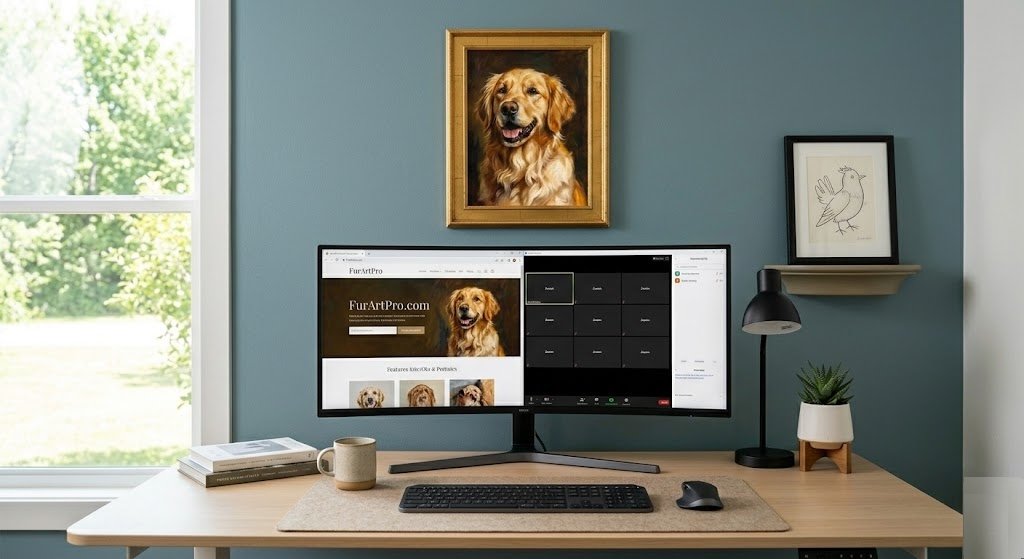
Behind your desk (the wall you face during video calls) has a secondary benefit: everyone on your Zoom meetings will see your pet portrait. Without exception, this generates comments. It’s a conversation starter in the best professional-personal way.
On a bookshelf — a smaller portrait leaned between books or on a shelf bracket adds warmth to what can otherwise be a purely utilitarian space.
In a gallery wall of inspiration — mix your pet portrait with prints, quotes, and artwork that energizes your work. A pop art or sketch portrait works especially well in creative workspaces.
Size guidance: 11×14″ or 16×20″ for desk-facing walls. 8×10″ for shelf displays.
Style pairings that work:
- Modern home office → Sketch portrait in a clean matte black frame
- Creative studio → Pop art portrait, no frame or thin metal frame
- Traditional study → Oil painting portrait in a classic wood frame
- Warm/cozy home office → Watercolor portrait in a natural or warm-toned frame
The Entryway or Hallway
The entryway is the first and last thing you see when you move through your home. A pet portrait here sets a tone — warmth, personality, a sense of what this home is about — before anyone has even reached the living room.
Hallways are particularly well-suited to vertical portrait orientations and gallery wall arrangements. The narrow linear format of a hallway naturally leads the eye along a sequence of images.
A single statement piece in an entryway works best when the portrait is large enough to not feel lost — 16×20″ minimum in most entryways.
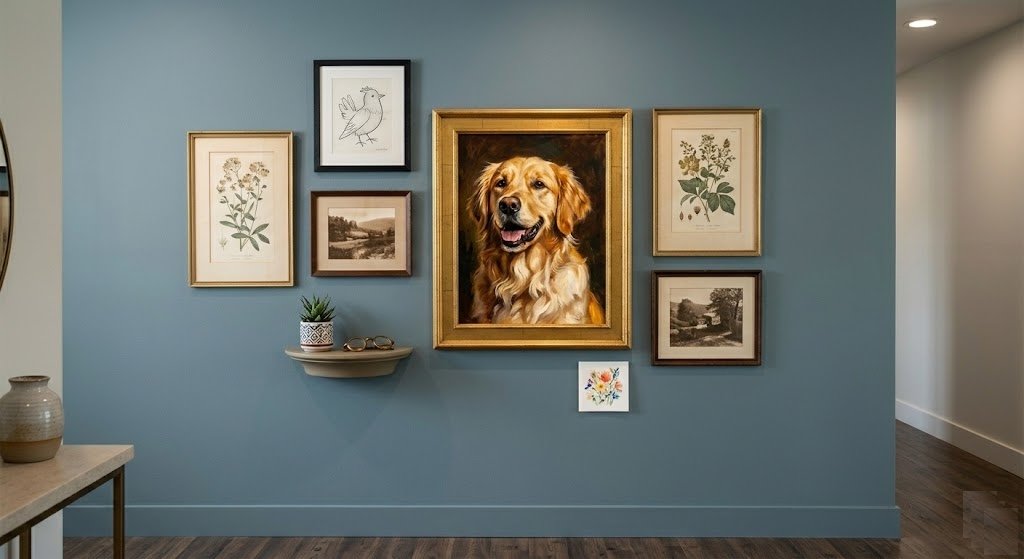
A hallway gallery wall is where you can go larger in ambition. Mix your pet portrait (or portraits, if you have multiple pets) with family photos, travel prints, and other artwork. The portrait becomes the emotional anchor in a broader visual story.
Size guidance: 16×20″ minimum for solo entryway pieces. Gallery walls can include 8×10″ through 20×24″ for variety.
Style pairings that work:
- Classic/traditional home → Oil painting or royal portrait in coordinating frames
- Modern home → Sketch portrait in matching frames (all black, all white, or all natural wood)
- Eclectic/personal → Mix styles and frame colors intentionally — let the portrait be the thread that ties it together
The Kitchen or Dining Room
Less traditional, more charming. A pet portrait in the kitchen or dining room brings life and warmth to a functional space, and because the room is social by nature, it invites comments and conversations constantly.
Above a dining buffet or sideboard works well for medium to large portraits. The furniture acts as a visual anchor below the art.
On a kitchen gallery wall — if your kitchen has a wall space that isn’t covered in cabinets (a blank wall opposite the sink, or the wall beside a breakfast nook), a small portrait or a grouping of small prints adds enormous personality.
In a breakfast nook — a cozy corner with a portrait is the kind of small home detail that makes a space feel genuinely loved.
Size guidance: 11×14″ to 16×20″ depending on wall space. Kitchens usually call for slightly smaller pieces than living rooms.
Style pairings that work:
- Farmhouse kitchen → Oil painting or watercolor in a natural wood frame
- Modern kitchen → Sketch portrait in white or minimal frame
- Colorful/eclectic kitchen → Pop art portrait to match the energy
The Bathroom
Don’t overlook the bathroom. It’s one of the more interesting rooms to hang art in — every guest uses it, and a pet portrait there always generates a smile or a compliment.
The trick with bathrooms is humidity and light. Choose a wall away from the direct splash zone of the shower or sink. Natural light is your friend here; artificial bathroom lighting can flatten colors, so if you have a window-facing wall, that’s your best spot.
Size guidance: 8×10″ or 11×14″. Bathrooms call for smaller, more intimate pieces.
Style pairings that work:
- Spa-style bathroom → Watercolor portrait in a minimal white frame
- Colorful/bold bathroom → Pop art portrait for maximum impact in a small space
- Rustic bathroom → Oil painting portrait or sketch in a natural wood frame
The Children’s Room or Nursery
A custom pet portrait in a child’s room is something they’ll grow up with — a piece of art that’s theirs, about something they love. For homes with both kids and pets, having the family pet on the bedroom wall creates a bond that’s hard to quantify.
Nurseries call for soft, dreamy artwork — watercolor is the obvious choice, with a light palette that complements typical nursery colors without overwhelming.
Children’s bedrooms have more flexibility. A pop art portrait in a bright, energetic room works beautifully. A sketch portrait in an older child’s minimalist setup is something they might actually keep into adulthood.
Size guidance: 8×10″ or 11×14″ for most children’s rooms. Hang slightly lower than standard adult wall height — eye level for a child is a genuine consideration.
Style pairings that work:
- Nursery → Watercolor in soft pastels
- Playful child’s room → Pop art in a fun frame
- Older child/teen room → Sketch or pop art depending on their taste
Gallery Walls: How to Do It Right
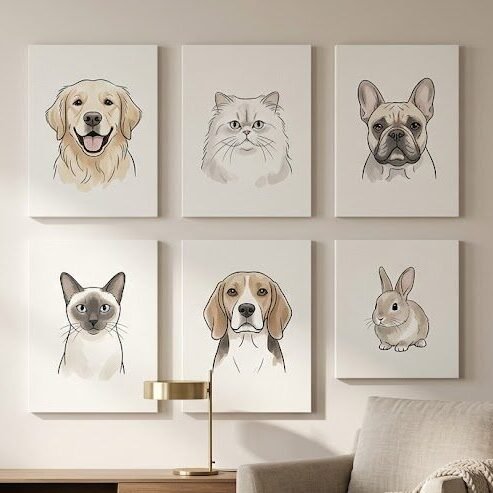
A gallery wall built around a custom pet portrait is one of the most personal wall arrangements you can create. Here’s how to make it work:
Let the portrait be the anchor. Your pet portrait should be the largest and most visually prominent piece. Everything else supports it — smaller prints, photos, objects. Size and center the portrait first, then build outward.
Mix sizes intentionally. The classic gallery wall has one large piece (your portrait), two or three medium pieces, and several small pieces. Odd numbers feel more natural than even.
Consistent framing keeps it cohesive. You don’t need identical frames, but choosing a single metal finish or wood tone throughout prevents the wall from looking chaotic. Exception: if you’re going for an eclectic, maximalist gallery wall, variety is the point — but even then, some element should repeat (mat color, frame profile, or artwork orientation).
Lay it out on the floor first. Arrange your grouping on the ground before putting a single nail in the wall. Take a photo of the layout, tape paper templates to the wall, then hang.
Standard spacing: 2–3 inches between frames. Any more and the pieces feel disconnected. Any less and they feel crowded.
Sizing Quick Reference
| Room | Recommended Size | Placement |
|---|---|---|
| Living room (feature wall) | 20×24″ or larger | Center of wall, eye level |
| Living room (above sofa) | 16×20″ or 20×24″ | 6–8″ above sofa back |
| Bedroom (above headboard) | 16×20″ or 20×24″ | Centered over bed |
| Home office | 11×14″ or 16×20″ | Eye level, behind desk |
| Entryway | 16×20″ minimum | Centered, eye level |
| Hallway gallery | 8×10″ to 20×24″ mix | 57–60″ center from floor |
| Kitchen/dining | 11×14″ to 16×20″ | Above furniture or nook |
| Bathroom | 8×10″ or 11×14″ | Away from moisture |
| Children’s room | 8×10″ or 11×14″ | Slightly below standard height |
Standard hanging height: The center of your artwork should sit at 57–60 inches from the floor — this is the average human eye level, and the standard used by most galleries and interior designers.
The Frameless Advantage
One last thing worth saying: because FurArtPro portraits arrive without a frame, you have complete control over how this piece lives in your home. You’re not stuck with a frame that almost matches your walls, or fighting with a pre-framed size that doesn’t quite fit the space.
Pick up a frame that already exists in your room. Match the wood tone of your furniture. Match the metal finish of your hardware. Or go completely frameless with mounting strips for that clean, floated look that’s everywhere in contemporary interiors.
The portrait is the art. The frame is the finishing touch that makes it yours.
👉 Order Your Custom Pet Portrait at FurArtPro.com
Upload your photo, choose your style, select your size — and start thinking about which wall deserves it most.
Still figuring out size, style, or placement? We’re genuinely happy to help. Send us your room dimensions and we’ll point you in the right direction.